
Key Takeaways
- A recent eye exam and prescription come first when you shop for kids’ glasses.
- The 3 numbers inside the temple arm show lens width, bridge width, and temple length in millimetres.
- Plastic, acetate, and memory metal frames each suit different ages and activity levels.
- Standard kids’ glasses packages feature HOYA Phoenix Trivex lenses, which offer impact resistance, built-in UV protection, and better scratch resistance and optical clarity than polycarbonate lenses.
- Letting your child pick their style can help them wear their glasses more often.
Your child heads off to school in a new pair of glasses, and by dinner the glasses are perched on top of their head or tucked in a backpack. At Insight Eyecare, families in South Surrey and White Rock often share this same story when they come in looking for a new pair.
To choose glasses for kids, start with a current prescription, then look for a snug fit, durable frame materials, impact-resistant lenses, and a style your child loves. A children’s eye exam with an optometrist gives you the prescription and measurements you need before you browse the frame display.
Why Fit Comes First
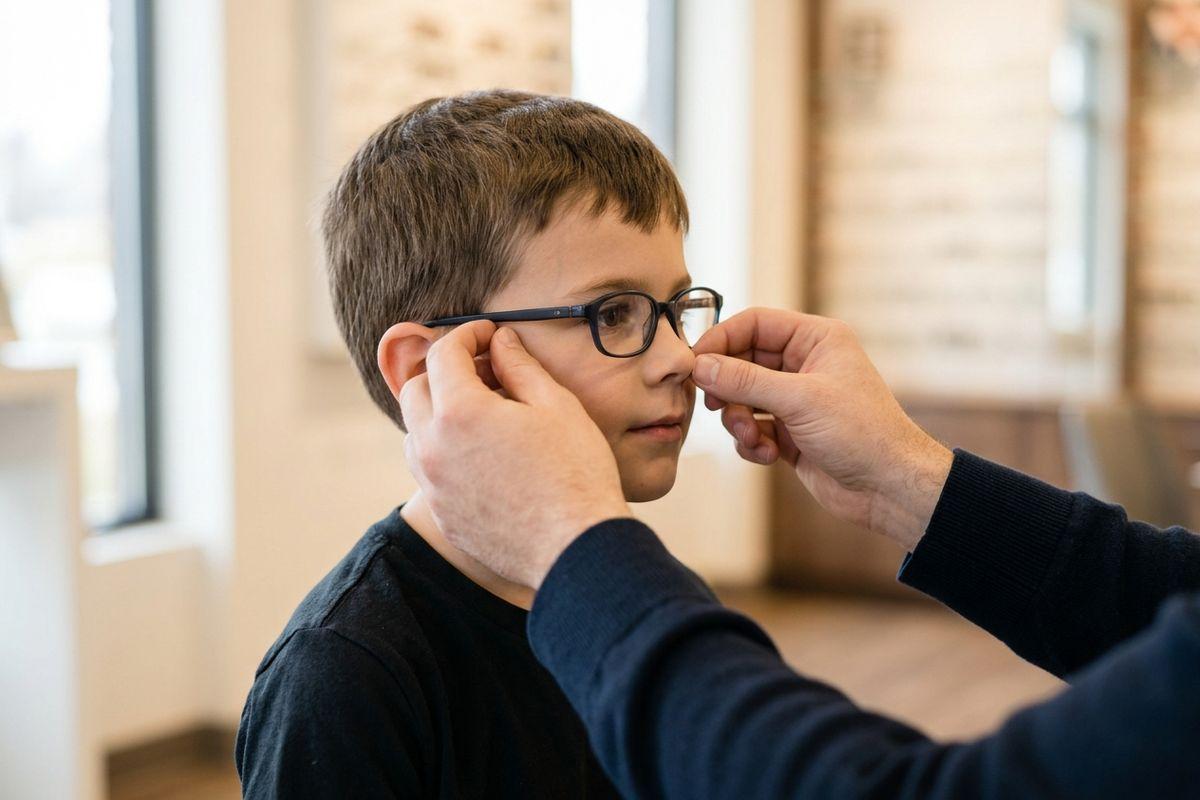
Kids won’t keep wearing glasses that pinch behind their ears or slide down their nose every time they look at a book.
Comfortable glasses get worn more often, and that’s how they do their job. A poor fit can lead to slipping and discomfort. Your child might push the frame up again and again, or peek over the top of the lenses instead of through them.
Fit starts before you try on a single frame. A recent eye exam gives you an up-to-date prescription, so the new lenses match how your child sees today.
What Do the Numbers on Kids’ Frames Mean?
Lens Width, Bridge Width, and Temple Length
Flip the frame over, and you’ll find 3 numbers printed inside the temple arm, the part resting over your child’s ear. All measurements are shown in millimetres.
The first number, such as 52mm, usually refers to lens width. The second is the bridge width, the space between the lenses where the frame sits on the nose. The third is the temple length, which is the length of the arm that rests behind the ear.
Frame Size by Age and Pupil Distance
Frame makers list approximate size ranges for each age group, which gives you a starting point when you shop. Every child grows at their own pace, though, so those ranges work as a guide.
Pupil distance is the space between the centres of your child’s pupils. This measurement helps line up the lens centres with your child’s eyes.
If your child’s current glasses fit well, use those numbers as a reference and try to stay within 2 to 3 mm of the current fit.
Which Frame Materials Work Well for Kids?
Plastic and Acetate Frames
Plastic frames are lightweight, durable, and budget-friendly, which helps when glasses get tossed in a lunch bag or dropped on the playground. Acetate is a hypoallergenic choice for kids with sensitive skin.
Both materials leave plenty of room for fun, like bright colours and bold patterns.
Metal and Memory Metal Frames
Memory metal bends back to its original shape, so a frame your child accidentally sits on has a good chance of bouncing back. Slim, low-profile metal styles often suit older kids who want a more grown-up look.
If your child has sensitive skin, ask about nickel-free options.
Extras for Comfort and Fit
A few small add-ons can make a big difference in how well glasses stay put. Here are extras worth asking about:
- Head straps and ear stops help keep glasses in place on younger kids.
- Spring hinges suit active kids who are tough on their frames.
- Adjustable or built-in nose pads help the frame sit comfortably on smaller noses.
What Lenses Should Kids Wear?
HOYA Phoenix Trivex Lenses
Our standard kids’ glasses packages feature HOYA Phoenix lenses, made from Trivex material. Trivex is a great choice for children’s eyewear because it combines impact resistance with excellent optical clarity.
These lenses also offer built-in UV protection and better scratch resistance than polycarbonate lenses. Their lightweight design helps keep glasses comfortable throughout the school day and during everyday activities.
What About Polycarbonate Lenses?
Polycarbonate is another impact-resistant lens material. At Insight Eyecare, our MiYOSMART and MiYOSMART iQ lenses are made from polycarbonate rather than Trivex. These lenses are designed for children who need myopia management.
Helpful Lens Coatings
A scratch-resistant coating helps lenses hold up to everyday handling, like being set face-down on a desk. An anti-reflective coating reduces glare from bright classroom lights and screens.
How Can You Help Your Child Wear Their Glasses?
Let Your Child Pick Their Style
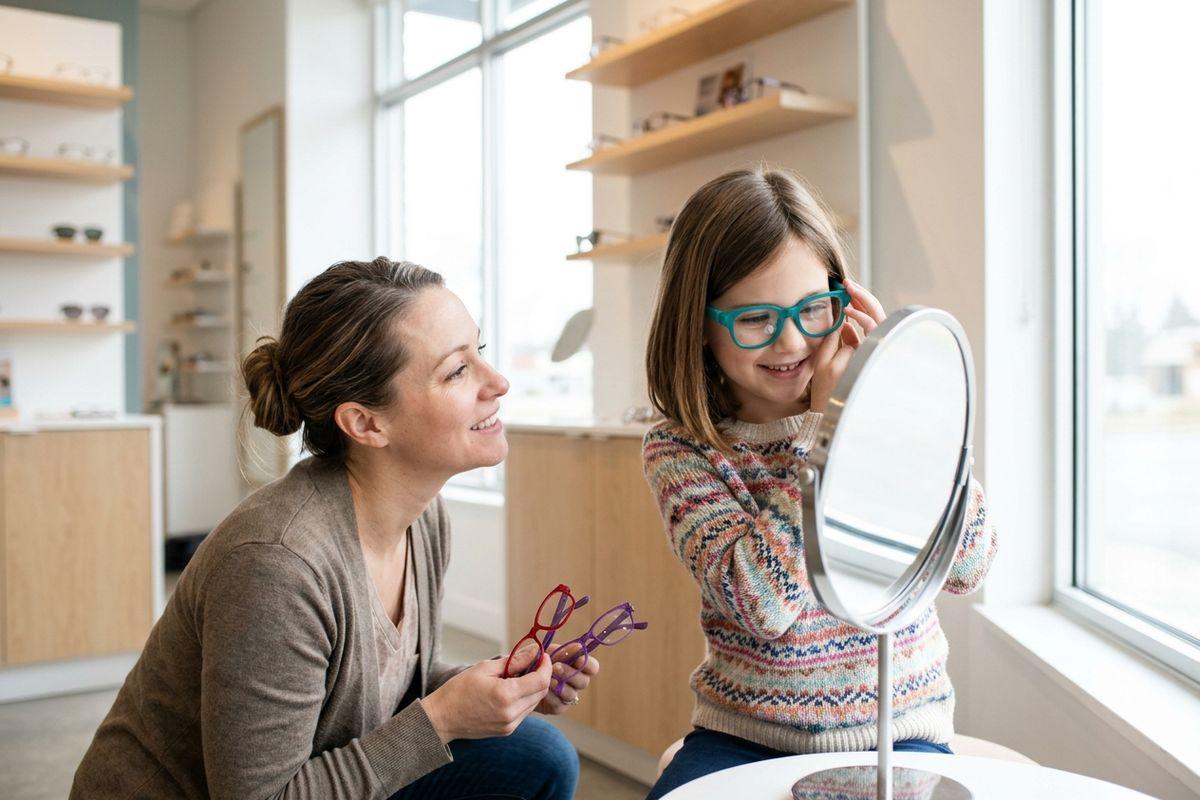
Kids are more likely to wear glasses they helped choose. Pick a colour or shape together, and let your child have the final say between a few well-fitting options.
Rectangular frames suit many face shapes, so they’re an easy place to start.
New glasses can feel strange at first. Short wear sessions at home, like during a favourite show or while drawing, can help build the habit.
Plan for Lost or Broken Glasses
Even careful kids misplace or accidentally damage their glasses, so having a spare pair on hand means your child can keep seeing clearly if their main pair needs repairs or goes missing.
Bright frames are also easier to spot under a couch cushion or in the grass. Choosing durable frames and impact-resistant lenses can help them handle the demands of everyday wear.
Visit an Optometrist in South Surrey and White Rock
Yearly eye exams keep your child’s prescription current as their eyes grow and change. After the exam, our optical team at Insight Eyecare can help with frame fit, measurements, and adjustments so the new pair sits comfortably.
Book your child’s next appointment and find a pair your child will be happy to wear every day.