


If you wear contact lenses, you’ve likely seen a small date printed on the box or the individual blister packs. Maybe you’ve wondered why contacts even expire at all. At Insight Eyecare, we know this expiration date can be easy to overlook, especially if you have a large supply. But like many health products, contact lenses have a shelf life for a reason.
Yes, contact lenses do expire, and using them past their expiration date can introduce risks to your eye health. It’s important to understand what that date means for your eye safety, which starts with a proper contact lens exam.
Your Contact Lens Box and Its Expiration Date
The expiration date is a key piece of information that helps you keep your eyes comfortable and healthy. Understanding safe contact lens practices, including where to find the expiration date and what it signifies, is the first step in proper contact lens care.
How to Find the Date
You can find the expiration date in a couple of places. The manufacturer prints this information clearly for your safety. Look for the letters “EXP” followed by a date on the outer cardboard box, or on the foil lid of each individual blister pack.
What the Date Means
This date is not about the contact lens material itself breaking down. Instead, it is a guideline for the sterile packaging that protects the lens.
The date applies to an unopened, sealed contact lens package. After this date, the manufacturer can’t guarantee that the solution in the blister pack remains sterile, so it isn’t recommended to put expired contacts in your eyes.
Why Contact Lenses Expire
The expiration date is directly related to the packaging that keeps your contact lenses safe before you use them. Over time, both the solution and the seal can lose their effectiveness.
The Saline Solution
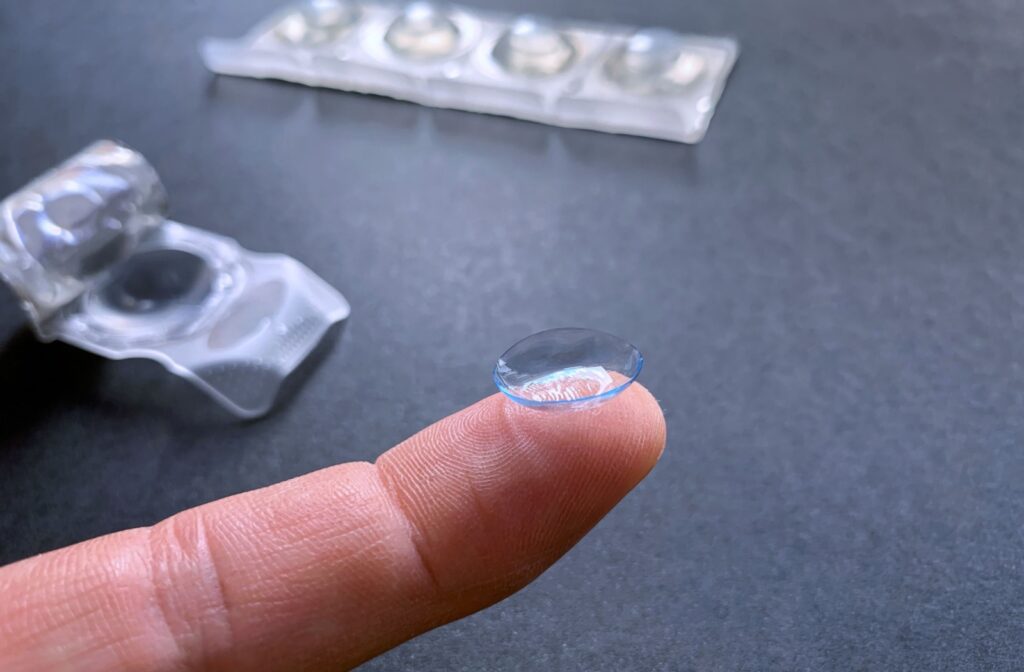
Each contact lens is suspended in a saline solution inside its blister pack. This fluid is important for keeping the lens sterile and ready for your eye.
Over time, the solution inside the blister pack may no longer maintain a sterile environment, increasing the risk of bacterial contamination.
The Blister Pack Seal
The blister pack is designed to create a completely sterile environment for the lens. The integrity of that seal is important for protecting your eyes.
The adhesive on the seal can degrade over time, meaning that tiny, invisible gaps may form, allowing air or bacteria to enter. This compromises the sterile environment the lens needs.
Potential Risks from Expired Lenses
Placing a contaminated lens on your eye can lead to a range of problems, from minor irritation to more serious conditions that may require emergency eye care. Your eyes are sensitive, and using expired products can expose them to harmful microorganisms.
Using expired contact lenses increases your risk of:
- Eye infections
- Corneal ulcers
- Discomfort and irritation
How to Spot an Expired or Damaged Lens
Before you ever put a contact lens in your eye, a quick inspection of the package and the lens can help you avoid potential issues. Make it a habit to check every time as part of your lens wear and care routine.
Check the Packaging First
Your first line of defence is the packaging itself. If the packaging is compromised, the lens inside is no longer safe to use, regardless of the date.
Before you put new contact lenses in your eye, check:
- That there isn’t a broken or leaking seal on the blister pack.
- That the expiration date has not passed.
Inspect the Lens Itself
Even if the packaging looks fine, take a moment to look at the lens. A damaged lens can be uncomfortable and may harm your cornea (the clear outer layer of your eye).
If you notice any of these things, it’s a good idea to get a different pair of contact lenses:
- Any tears or rough edges.
- Unusual dryness or discolouration.
- If the lens seems warped or has lost its normal shape.
Proper Lens Care and Replacement Tips
Following a few simple guidelines can help you get the most out of your contact lenses while protecting your vision. Consistency is key to comfortable and safe lens wear.
Follow Your Replacement Schedule
Your prescription comes with instructions for a reason. Each type of lens is designed to be worn for a specific amount of time. You can talk to your eye doctor about the different contact lens options and find the right replacement schedule for you.
For example, daily disposable lenses should be put in the trash can (not flushed down the drain) after a single use. With bi-weekly or monthly lenses, follow the instructions on the packaging and replace them on time, even if they feel fine.
Schedule Regular Eye Exams
Regular eye exams are an important part of any contact lens wearer’s routine. A comprehensive eye exam can spot issues you may not notice yourself, including early signs of eye conditions, diabetes, or high blood pressure.
Schedule Your Visit
Your vision is important, and taking small steps (like checking expiration dates) can make a difference for your eye health and comfort. If you have any questions about your contact lenses or need to update your prescription, our team at Insight Eyecare is ready to help you see clearly and comfortably. Book your appointment today.