
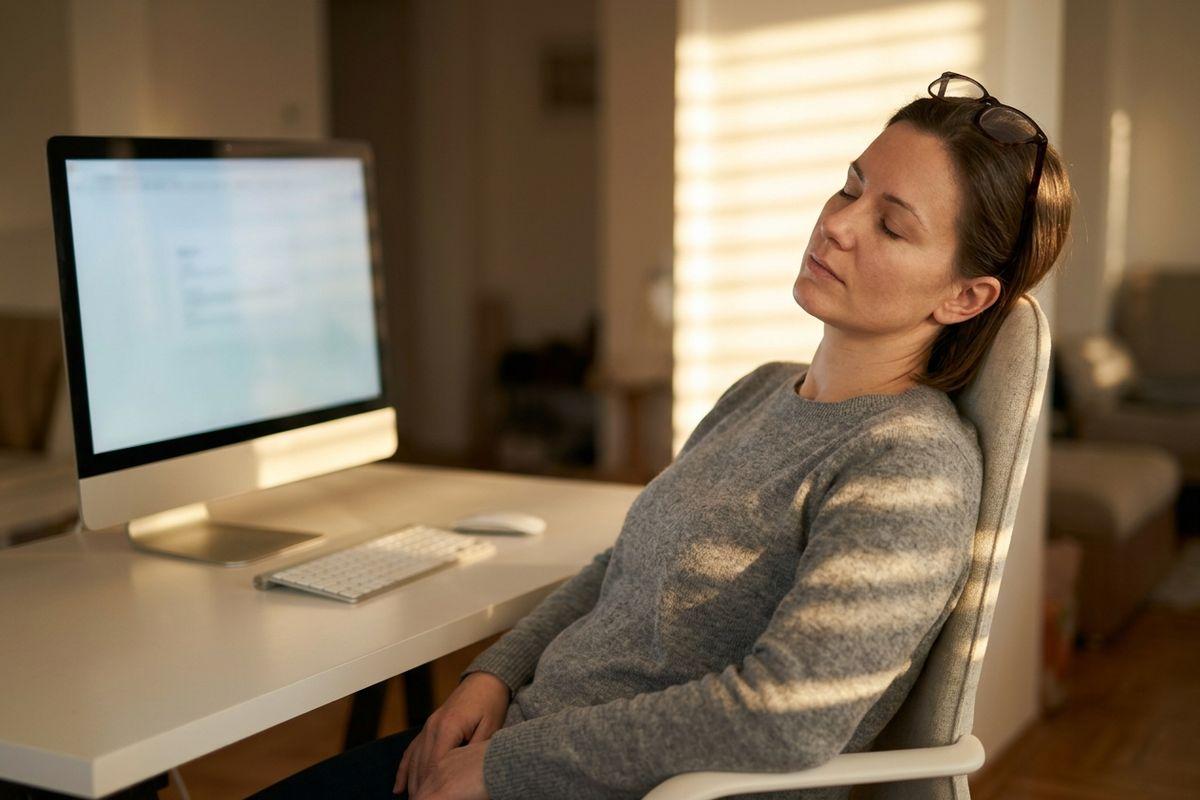
Plenty of people finish a workday at the computer with scratchy, tired eyes, and a bottle of drops has quietly become part of the desk setup. We hear about this constantly from patients whose jobs keep them on a monitor, and it’s often what starts a conversation about dry eye therapy.
Long hours in front of a screen can leave your eyes feeling dry and gritty, and they can make existing dryness worse. How that discomfort shows up day to day varies from person to person, so it’s easy to write it off as ordinary tiredness until it starts getting in the way.
How Screen Time Affects Your Tears
Settle into a spreadsheet on a screen and your blink rate drops sharply. You probably won’t notice it happening. Your eyes will. Each blink spreads a thin layer of tears across the surface of your eye. That film keeps things comfortable and clear, and it needs refreshing every few seconds to hold up.
Fewer blinks also tend to be partial ones, where the eyelid doesn’t fully close. Your tear film evaporates faster than your eyes can replace it. Long focus sessions also make it easy to skip the small things. Your water bottle sits untouched, and 2 hours disappear without a break.
What Digital Eye Strain Feels Like
Hours of close-up focus wear your eyes out. Digital eye strain is the term optometrists use for the cluster of symptoms that follows a stretch like that, and dryness is one of the more common ones.
For most people, the discomfort fades within an hour or two after stepping away. A dull headache behind the eyes or across the forehead often comes along with it.
Symptoms that linger well into your evening usually mean something else is contributing, which is worth a closer look.
Signs Your Eyes Need a Break From the Screen
Your body sends signals well before you consciously register a problem. Watch for a few of these:
- Burning or stinging that builds through the afternoon
- A gritty feeling, like something’s caught under your eyelid
- Blurry vision that clears up once you look away from the screen
- Watery eyes, which can show up even when dryness is the underlying issue
- A sore neck and shoulders after a long stretch at your desk
How Much Screen Time Is Too Much for Your Eyes
There’s no magic number here. Some people spend 8 hours on a monitor and feel fine, while others start noticing symptoms after 2.
How you use those hours matters more than the total. Uninterrupted stretches are harder on your eyes than the same amount of time broken up across a day.
An uncorrected prescription can add to the load, since your eyes work harder to hold focus at close range.
Habits That Can Ease Dry Eyes From Screen Time
A few adjustments can make a long day at the screen easier on your eyes:
- Follow the 20-20-20 rule. Every 20 minutes, look at something 20 feet away for 20 seconds.
- Blink fully and on purpose when your eyes start to feel tired. A handful of slow, complete blinks does more than a dozen quick ones.
- Keep water within reach and sip through the day, since staying hydrated supports tear production.
- Reach for preservative-free artificial tears before the discomfort sets in, rather than after.
- A warm compress in the evening can also help if your eyelids feel heavy or crusted when you wake up.
Setup and Screen Position Tips
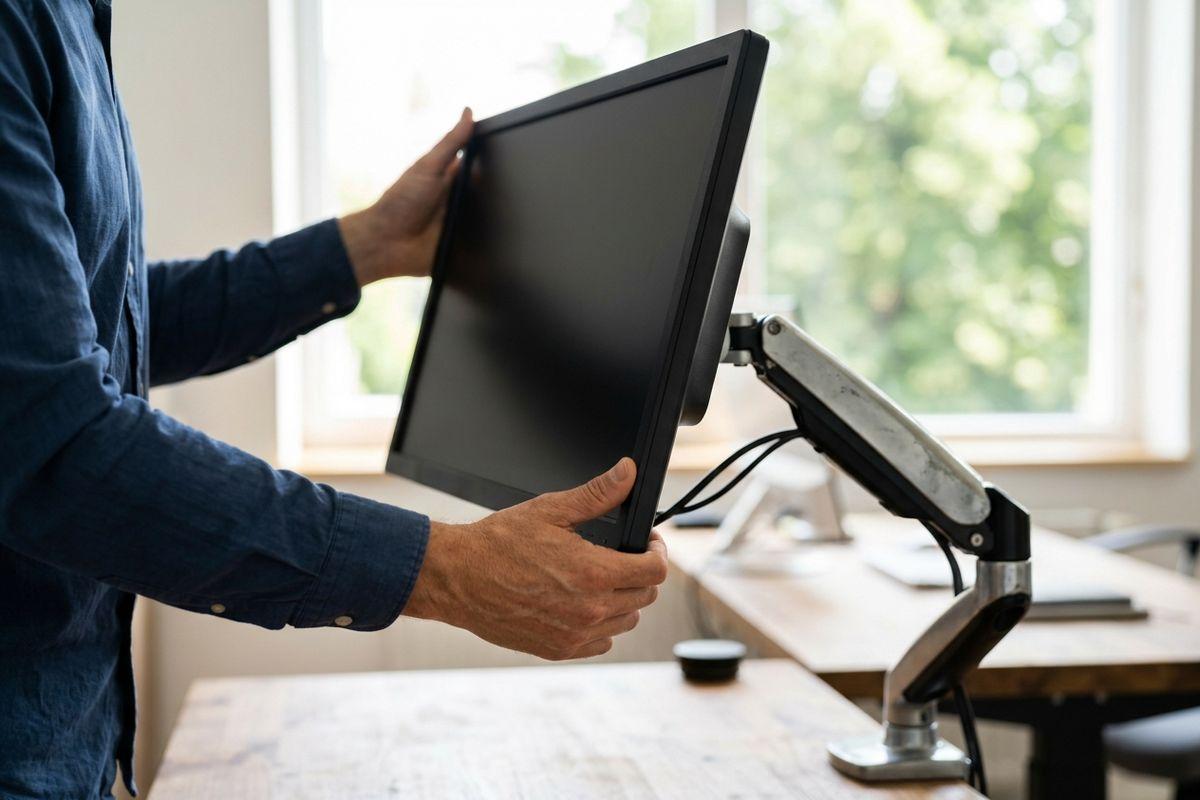
Keep your screen about an arm’s length away, with the top of the display near eye level. That small adjustment can take pressure off your neck and shoulders too.
Dry indoor air doesn’t help either. A humidifier in your workspace can make the air feel less parched, especially during the colder months.
What Else Can Cause Dry Eye
Several other things can dry your eyes out over the course of a day. Allergies and eyelid inflammation can leave people feeling scratchy by evening, and wearing contacts for long stretches can make it worse.
Some medications reduce tear production too, including antihistamines and certain blood pressure treatments. Hormonal changes and age play a role as well.
Your surroundings count for a lot. Wind and cold, dry winter air pull moisture off the surface of your eyes faster than your tear film can keep up.
An eye exam can sort out which of these is actually at play, so you’re not guessing your way through the drops aisle.
Make Screen Time Easier on Your Eyes
Book a visit if your symptoms stick around after you’ve tried drops and regular breaks. The same goes if the discomfort is getting in the way of your work or your reading.
The team at Insight Eyecare would be happy to take a closer look. Book your appointment with our eye specialists today.