
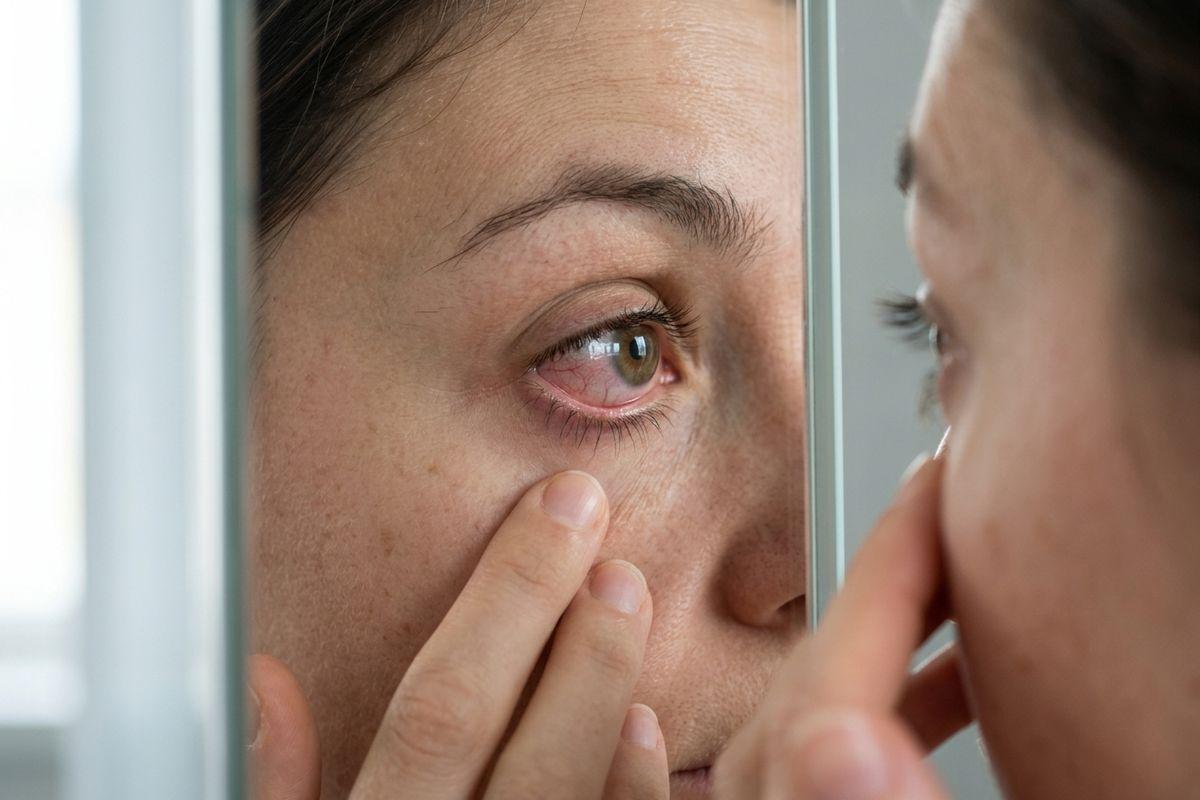
Bloodshot eyes tend to show up at the least convenient moment. Sometimes they itch. Other times they feel fine and just look tired.
Your eyes turn red when the tiny blood vessels across the white of the eye widen and become easy to see. What makes them widen is the real question, and the answer ranges from pollen and dry air to an infection or an injury.
Most redness settles within a day or two. When it hangs around, a comprehensive eye exam can sort out the cause, and ongoing management may be worth discussing if something like dry eye keeps bringing it back.
What Red Eyes Really Mean
The white of your eye holds a network of blood vessels so fine you don’t normally notice them. Irritation, allergens, and infection can all make those vessels swell, and once they do, the colour is hard to miss.
Redness shows up in one eye or both, sometimes building over several days and sometimes arriving between breakfast and lunch. That pattern gives your optometrist useful information.
Common Reasons Your Eyes Turn Red
By examining other symptoms that show up alongside red eyes, an optometrist can start narrowing down the cause.
Allergies and Everyday Irritants
Pollen, dust, pet dander, and mould top the allergen list. So do a few things people rarely connect to their eyes, like cigarette smoke, scented candles, a coworker’s perfume, or an afternoon in a chlorinated pool.
Allergy-related redness usually brings company. Watch for a few of these:
- Itching that makes you want to rub
- Burning or stinging
- Watery eyes
- Puffy or swollen lids
- Sneezing and a runny nose at the same time
Dry Eye and Screen Time
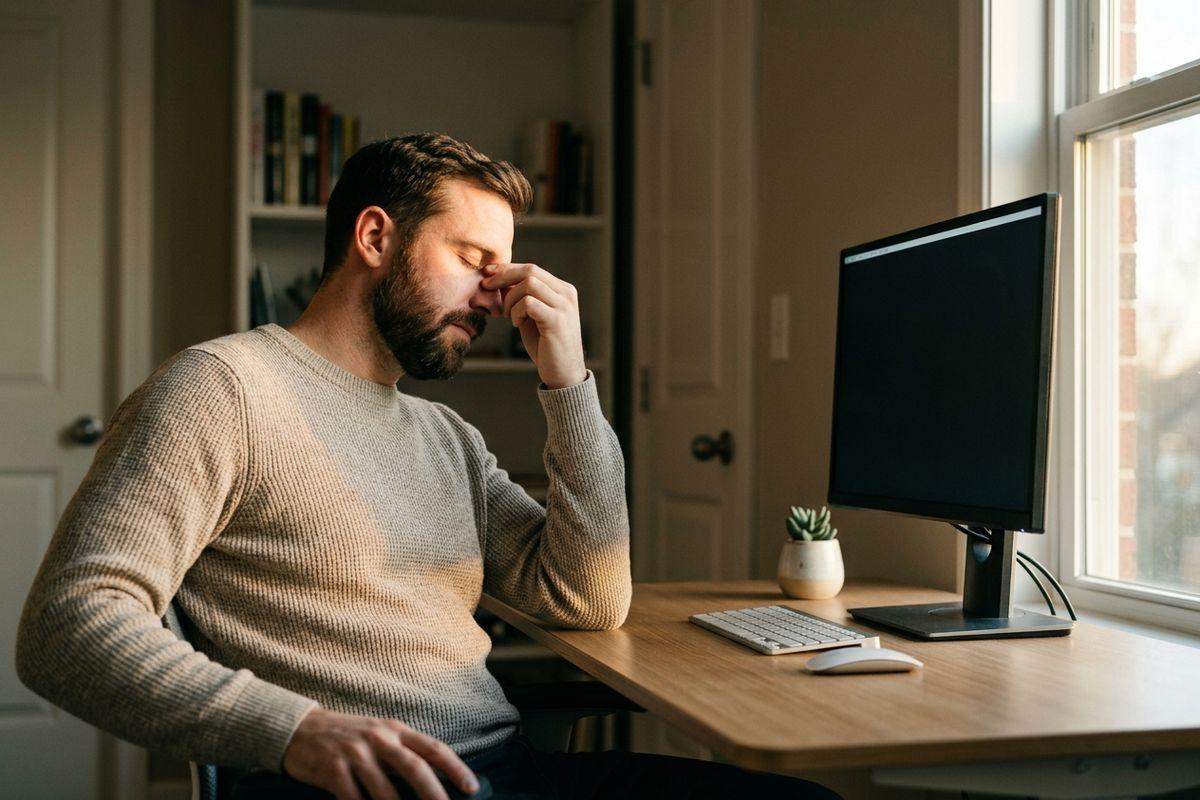
When your tears evaporate too quickly, your eyes can look red and feel worse than they look. Long stretches at a screen often make it more noticeable.
Dry eye tends to announce itself in a few ways:
- A gritty feeling, like sand you can’t blink away
- Blurriness that clears up when you blink
- Heavy, tired eyes by mid-afternoon
- Contact lenses that stop feeling comfortable partway through the day
Pink Eye and How It Spreads
Conjunctivitis can be viral, bacterial, or allergic. Along with redness, you might see discharge, find your lashes crusted together in the morning, or struggle with bright light.
Viral and bacterial types spread easily, so wash your hands often and leave your contacts out until things settle. Keep your towel and pillowcase to yourself while symptoms last.
Broken Blood Vessels in the Eye
A burst vessel on the surface looks far worse than it feels. A bright red patch spreads across the white, usually without pain, and it can follow a hard sneeze or a heavy lift. Most fade on their own within 2 weeks.
Mention it to your optometrist if these keep happening or if you take a blood thinner, since a pattern is worth looking into.
Why Just One Eye Might Be Red
When only one eye turns red, something local is often behind it. A scratch on the surface, a stye along the lid, or a speck of debris caught under the lid can all do it.
Contact lens irritation and injuries tend to stay on one side too. So does inflammation inside the eye. Book an exam if one eye stays red on its own, especially with pain.
Home Care and Habits to Calm Red Eyes
Start by stepping away from whatever triggered them. Place a cool compress over closed lids for a few minutes to calm mild irritation, then use artificial tears to rinse and moisten the surface. Gentle lid washing with a mild cleanser keeps the margins clear.
A few habits can reduce how often redness comes back:
- Skip the rubbing, even when your eyes itch
- Wash your hands before touching your face
- Clean and replace contact lenses as directed
- Take eye makeup off every night
- Step away from screens regularly
Redness-Relief Drops and Their Downside
Drops marketed for redness can work in the moment, but overuse can lead to rebound redness, where your eyes look redder once the drops wear off. They can also dry your eyes out and mask symptoms an eye doctor would want to see.
When Red Eyes Need an Optometrist
Some redness deserves an appointment in the next few days:
- Redness lasting more than a week
- Yellow, green, or crusty discharge
- Redness that keeps coming back
- Contacts that have become uncomfortable to wear
Call us right away if you notice any of these:
- Eye pain, headache, or fever
- Sudden vision changes or halos around lights
- Strong sensitivity to light
- The feeling of something stuck in your eye
What Happens at Your Appointment
At your appointment, your optometrist examines the surface of your eye and your lids under magnification, then builds a treatment plan based on what they find. You’ll leave knowing what’s going on and what to do next.
Get Answers About Your Red Eyes
Red eyes don’t always mean trouble. But when they keep returning, an exam can tell you whether dryness, allergies, or something else is driving it.
Book an appointment with Insight Eyecare and let our team take a proper look.