


Sudden eye discomfort is one of the more common complaints we hear, and it rarely comes with an explanation. Your routine didn’t change, so the timing feels random.
Dry eyes can start suddenly when something in your environment, your habits, your health, or your medications changes, and your tears stop coating the surface of your eye evenly. The trigger isn’t always obvious from how it feels, since dryness can show up as watery eyes or vision that turns blurry just as easily as a gritty ache.
What Sudden Dry Eyes Feel Like
The first clue is usually a sensation rather than anything you can see in the mirror. Your eyes might sting, burn, or feel scratchy, and the surface can look red or react to bright light more than usual.
Tearing up throws people off. When the surface gets irritated, your glands can push out a rush of tears that drain away before they do much good.
Watch for a few of these as the day goes on:
- Stinging or burning
- A scratchy, gritty feeling
- Redness across the white of the eye
- Sensitivity to light
- Watery eyes
Signs Worth a Closer Look
Some symptoms deserve a closer look. Bring it up at an appointment if the discomfort lasts more than a few days or your contacts become unwearable by mid-afternoon. Headlights that smear during night driving are worth mentioning too, along with the feeling that something is stuck in your eye when nothing is there.
Habits and Surroundings That Dry Out Your Eyes
Screens are a frequent culprit. You blink less while you’re focused on a monitor or a phone, and a long stretch of email or scrolling adds up fast.
Your surroundings matter just as much. Wind, smoke in the air, a car heater pointed at your face, or air conditioning running all afternoon can leave your eyes feeling raw, and dry indoor air does the same thing more slowly.
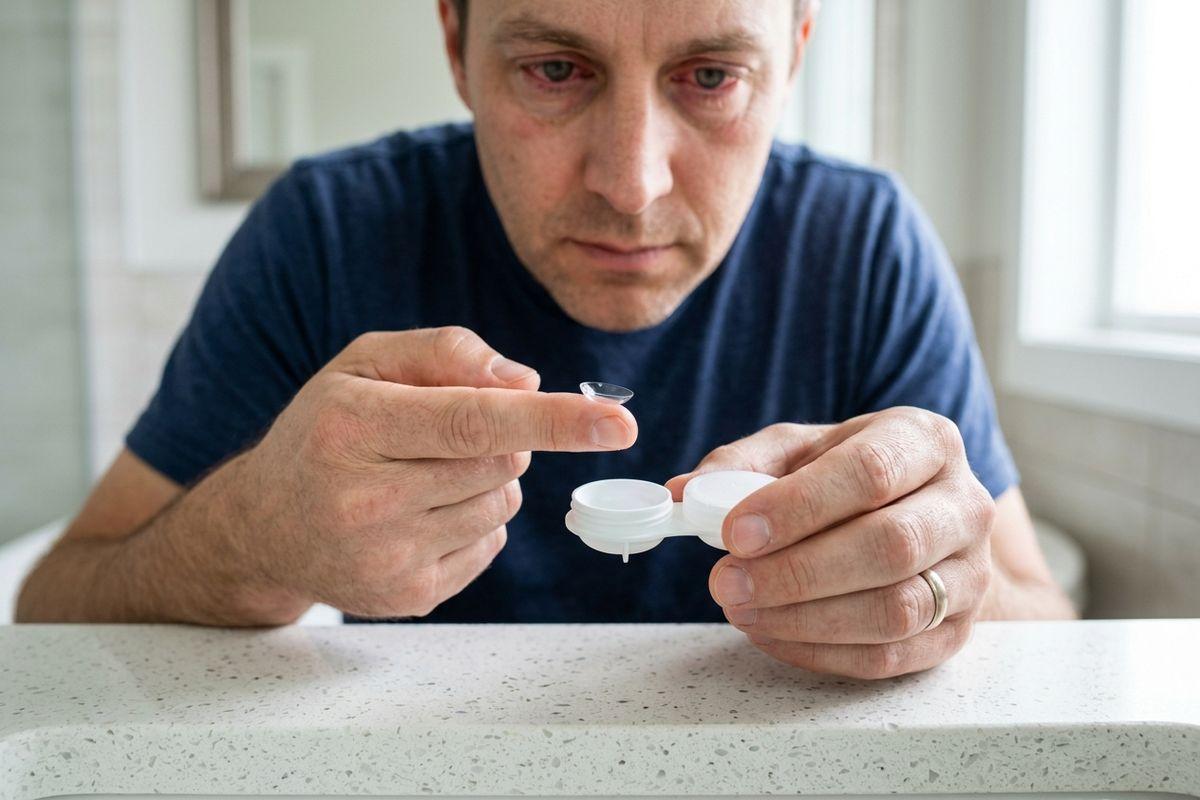
Contact lens habits also play a part, especially long-wear days, sleeping in lenses, or stretching a pair past its replacement schedule.
Your eyelids deserve attention as well. The oil glands along your lid edges can clog, and lash extension glue and buildup near the lash line may add to the irritation. Work a gentle lid cleaning into your evening routine and give those glands a chance to drain.
Health Conditions and Medications Behind Sudden Dry Eyes
Sometimes the cause has nothing to do with your surroundings. Hormonal changes during pregnancy, while on birth control, or through menopause are linked to dry eye symptoms, along with thyroid disease, diabetes, and autoimmune conditions like rheumatoid arthritis.
Medications such as antihistamines, antidepressants, and blood pressure medications are commonly associated with dryness, which may explain why symptoms begin within weeks of a new prescription. Ask your pharmacist whether dry eye is on the side-effect list before you assume the timing is a coincidence.
What you eat plays a quieter role. Diets low in vitamin A and omega-3s are linked to dry eye symptoms, and running short on water through the day can add to the discomfort.
What Gets Mistaken for Dry Eyes
A few other conditions produce nearly identical irritation. Seasonal and indoor allergies cause redness that feels like dryness, and so can inflammation along the eyelid margin.
You should also check your prescription. An outdated glasses or contact lens prescription makes your eyes work harder than they should, and that fatigue can easily look like dryness. An exam can sort out which one you’re dealing with, which beats guessing at drops that may not suit the problem.
How to Get Relief From Sudden Dry Eye
A few adjustments can help while you identify the cause. Start with these:
- Follow the 20-20-20 rule and look at something 20 feet away for 20 seconds every 20 minutes
- Practise full, complete blinks while you’re at the computer, since a half blink leaves the lower part of your eye uncovered
- Try preservative-free artificial tears through the day
- Run a humidifier in the rooms where you spend long stretches of time
Find Out What’s Behind Your Dry Eye
Sudden dryness doesn’t have to be something you work around with a bottle of drops and a shrug. Our optometrists at Insight Eyecare can examine your tear film, talk through what’s changed lately, and put together a plan that fits how you actually spend your days.
Book your appointment and let’s find out what is causing your dry eye.